Biotech · B2B commerce
STR Technologies
A vaccine-adjuvant supplier's entire customer-facing store, built solo from the ground up for a market that buys on trust.
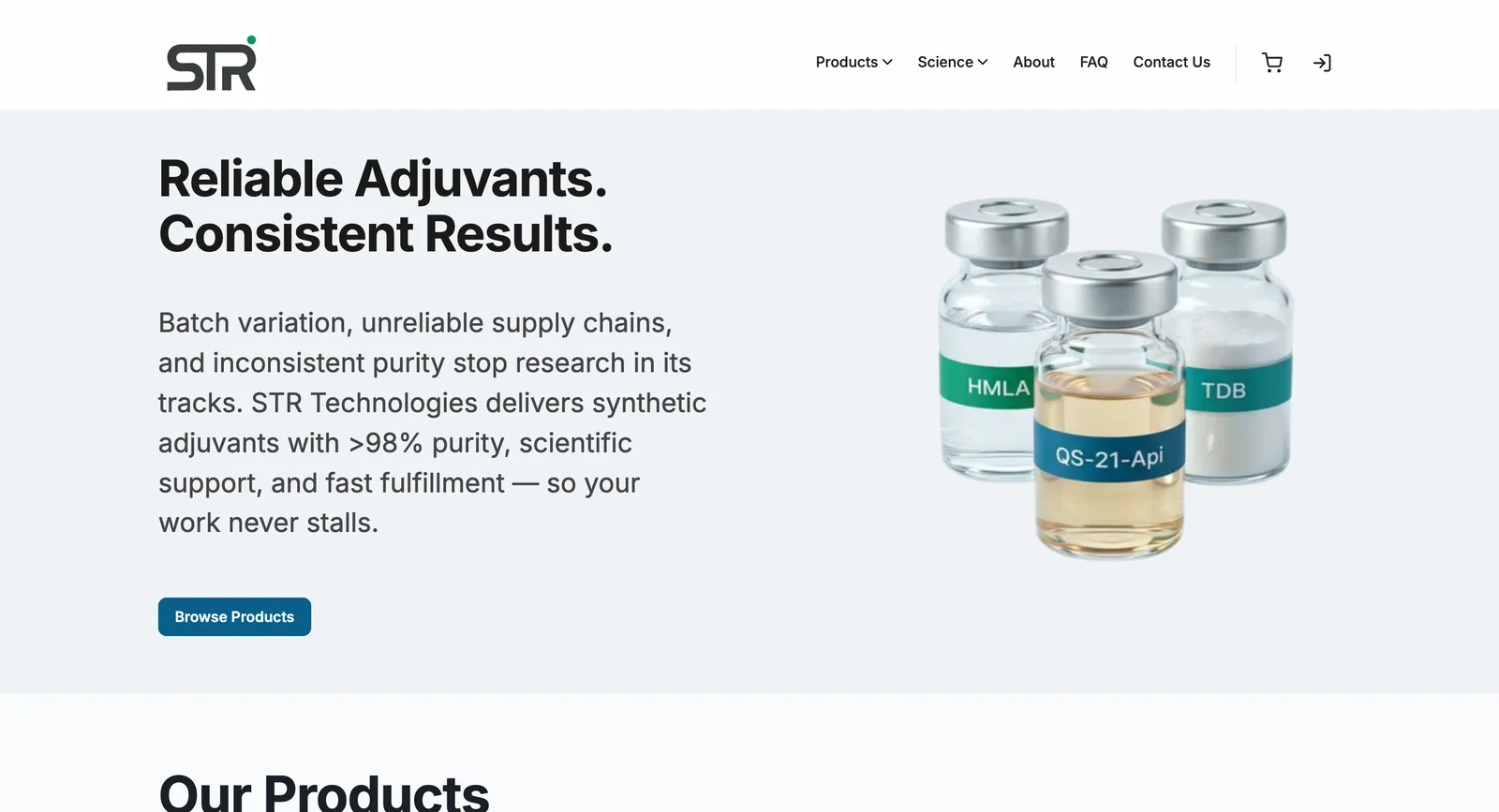
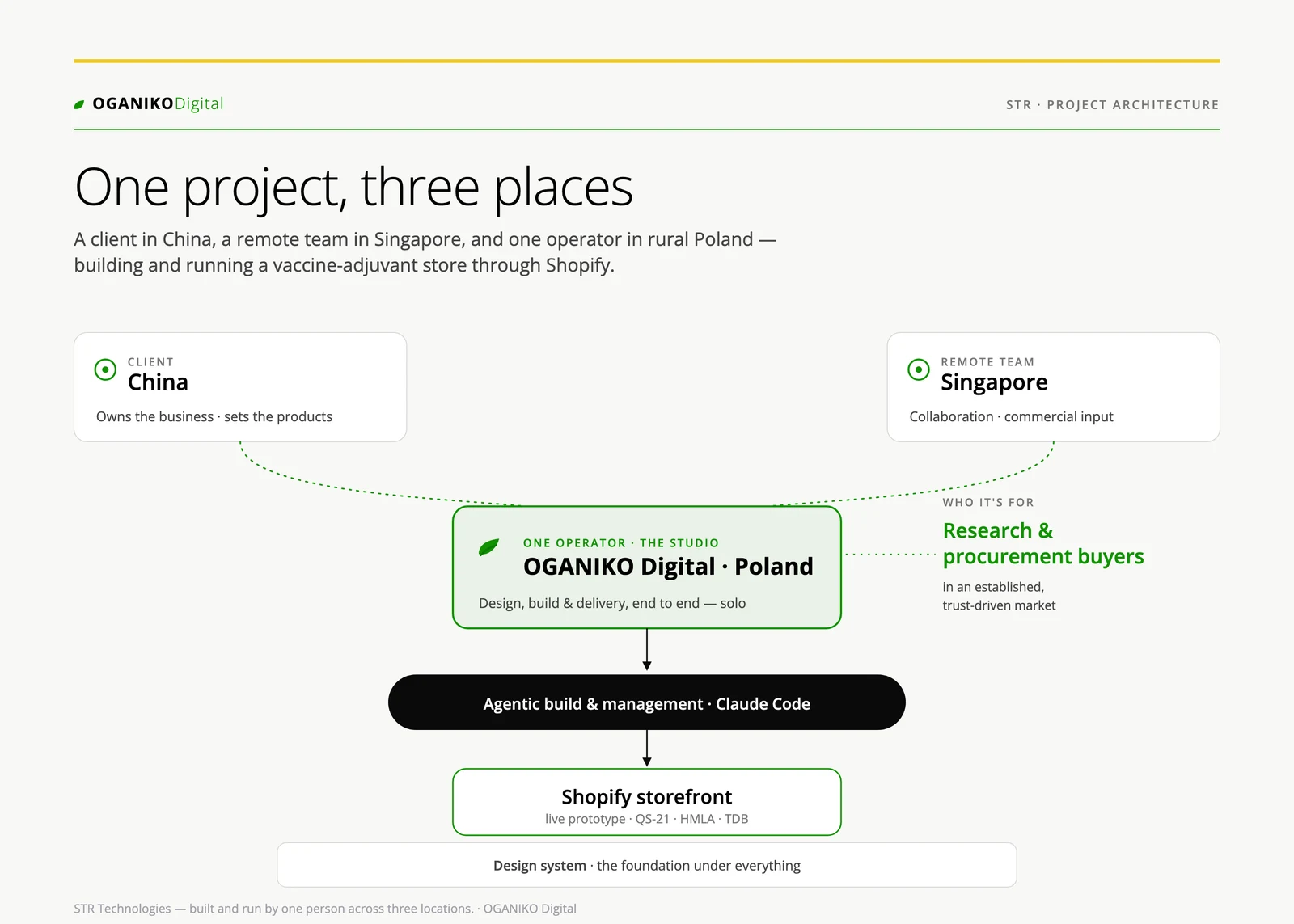
STR sells vaccine adjuvants to the pharmaceutical industry: research institutions and manufacturers, not retail. It's an established, conservative market, slow to trust anyone new. The client, based in China and Singapore, was entering it cold, with no store, no brand, and no obvious reason for a research buyer to take a first order seriously. My job was the whole customer-facing side of the business, built from nothing: the proposition a technical buyer meets, and everything underneath it that has to feel settled before they will.
The foundation came before the store
Before there was anything to sell, I built a design system. It covers the writing style, colour, typography, the logo and iconography, and a set of reusable components, and it lives as its own published styleguide rather than as notes in a file. Working this way means the store inherits a settled visual language instead of inventing one page by page. For a company trying to look established on day one, that consistency does quiet work: nothing on the site looks improvised, because none of it is.
Knowing who actually buys an adjuvant
A research buyer doesn't shop the way a retail customer does. They arrive knowing the compound, the grade, and the question they need answered, with little patience for a storefront that treats them like a browser. So the personas went into the design system itself. I studied the people the site is really for and wrote them down as avatars: a senior vaccine researcher who needs high-purity, batch-consistent material with full GMP documentation; a procurement manager who needs audit-ready COA and SDS, and reliable international shipping. That work shaped the language, the way products are described, and what each page leads with.

One operator, running the whole Shopify operation
Shopify was the platform decision early on. What changed the project is how the store gets built and run. Over the past six months Shopify has become far more reachable through agentic tooling, and I use Claude Code to control how the store is managed, end to end. Around that I built an architecture of agentic tools that handles both the build and the day-to-day running, so one person can develop the store, populate it, and maintain it without a team behind them.
The point isn't that it's automated. It's that the whole operation stays small enough for one operator to actually hold. That's the only way a solo build of this scope stays maintainable, and the only way the client isn't left dependent on a developer for every change.
Earning trust as the new name in the room
Everything above serves one problem: a new supplier in this market has to look like it has been here a while. The hero reads "Reliable Adjuvants. Consistent Results." because reliability and consistency are exactly what a procurement buyer checks for, and the rest of the site is built to back that up rather than just claim it. The restraint is deliberate. In a market that distrusts noise, looking calm and finished is more persuasive than looking eager.
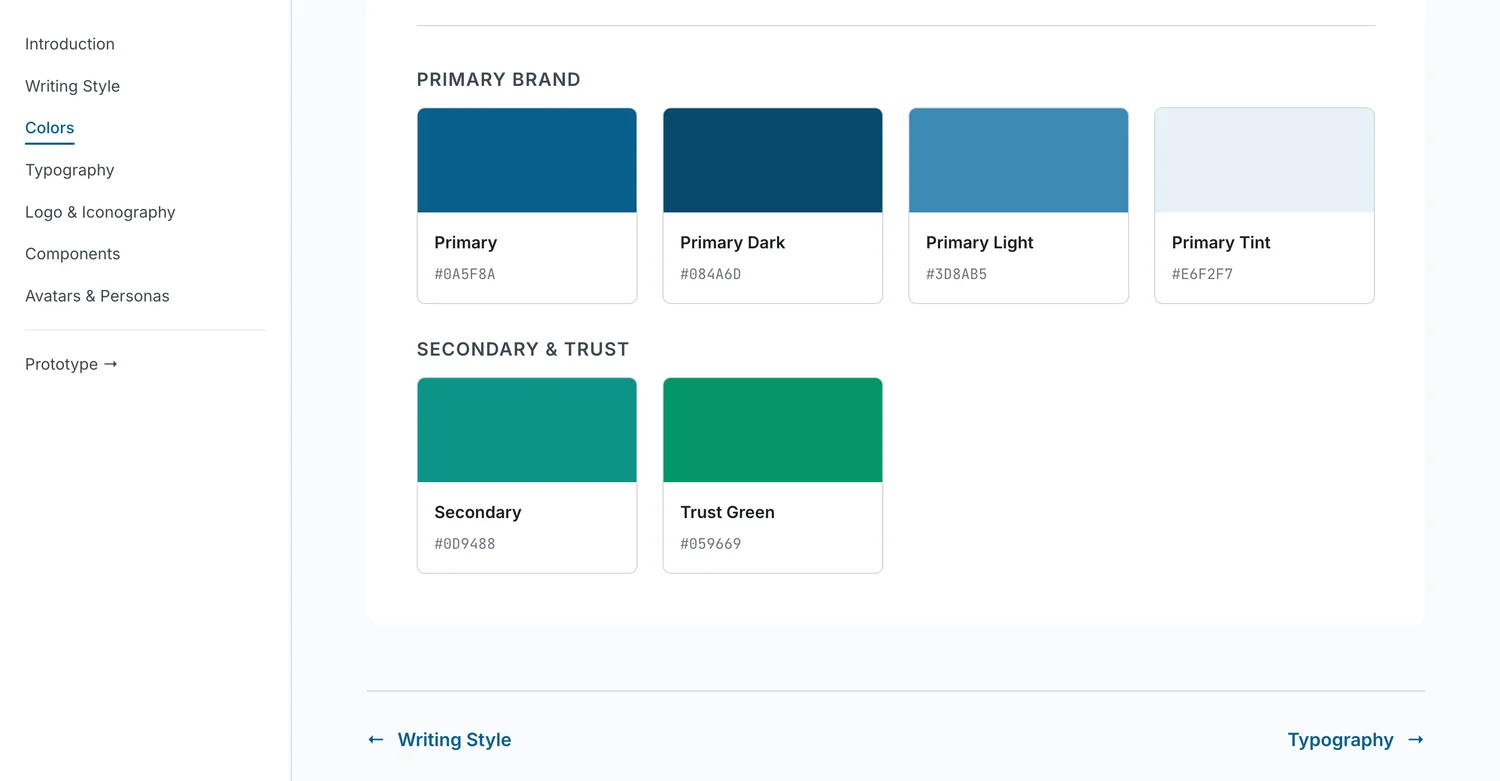

STR is live as a prototype and still moving. The storefront runs with real products, the design system is published and in use, and the build-and-run architecture is doing the work it was made for. It's the work of one person, which is the point: a complete customer-facing proposition for a regulated market, foundations first, kept light enough to run from a single desk. There's more to do before it's a finished store, and that's the honest state of it.